
TU Delft-Delft University of Technology
Real estate and heritage reuse
Real estate and heritage reuse is essential to achieve a sustainable built environment consistent with the European sustainability goals. This, however, requires an approach to reuse that includes not only the financial real estate value, but the wider social and environmental impacts of how we design, develop, use and reuse our buildings. Here, real estate practice and research can learn a lot from heritage studies. This session aims at presenting some of the impacts of real estate and heritage reuse within urban environments, considering both the temporal dimension and different scales. Understanding the impact of adaptive reuse on its surrounding area can open new perspectives for adaptive reuse as a sustainable approach to urban regeneration. In the session, we will present some cases from the Netherlands and their impact on real estate and urban values. The session will further explore the effects and impacts on value, and how real estate and heritage reuse can be facilitated within complex governance frameworks.
Dr. Maria Cerreta is Full professor, Department of Architecture (DiARC), University of Naples Federico II. Coordinator of Master Degree Course in Architecture, Coordinator of the Second Level Master in “Sustainable Planning and Design of Port Areas”, and Director of the Advanced Course in “Real Estate Market and Urban Regeneration” (MIRU), Department of Architecture, University of Naples Federico II, Italy. She is Professor, Institute for Research on Innovation and Services for Development (IRISS), National Research Council (CNR), Naples, Italy. She is co-editor in chief of the Journals “Aestimum” and “BDC”, Member of Scientific Board of the Journal “Valori e Valutazioni” and has been member of Scientific expert group “Social Multi-Criteria Evaluation for ex-ante Impact Assessment” for European Commission, Joint Research Center.
Dr. Erwin Heurkens is Associate Professor in Urban Development Management at the Faculty of Architecture and the Built Environment, TU Delft. His research and teaching focus on innovations in public-private-community partnerships for sustainable urban area and real estate development. He has extensive experience in conducting and publishing internationally comparative research (especially in England and the United States) and practice-oriented research on Dutch urban development. Additionally, he is the co-programme leader of the Master City Developer programme for urban development professionals and project leader at TU Delft for the Urban Transformation programme.
The webinar will be presented by Gianluca Mattarocci, who will also act as a speaker. Gianluca Mattarocci is Full Professor of Economics of Financial Intermediaries at the University of Rome Tor Vergata (Italy). He is also director of the Bachelor in Business Administration and Economics at the University or Rome Tor Vergata (Italy) and Director of the Major in Real Estate Finance at LUISS Business School, Rome (Italy).
Responsible for the webinar
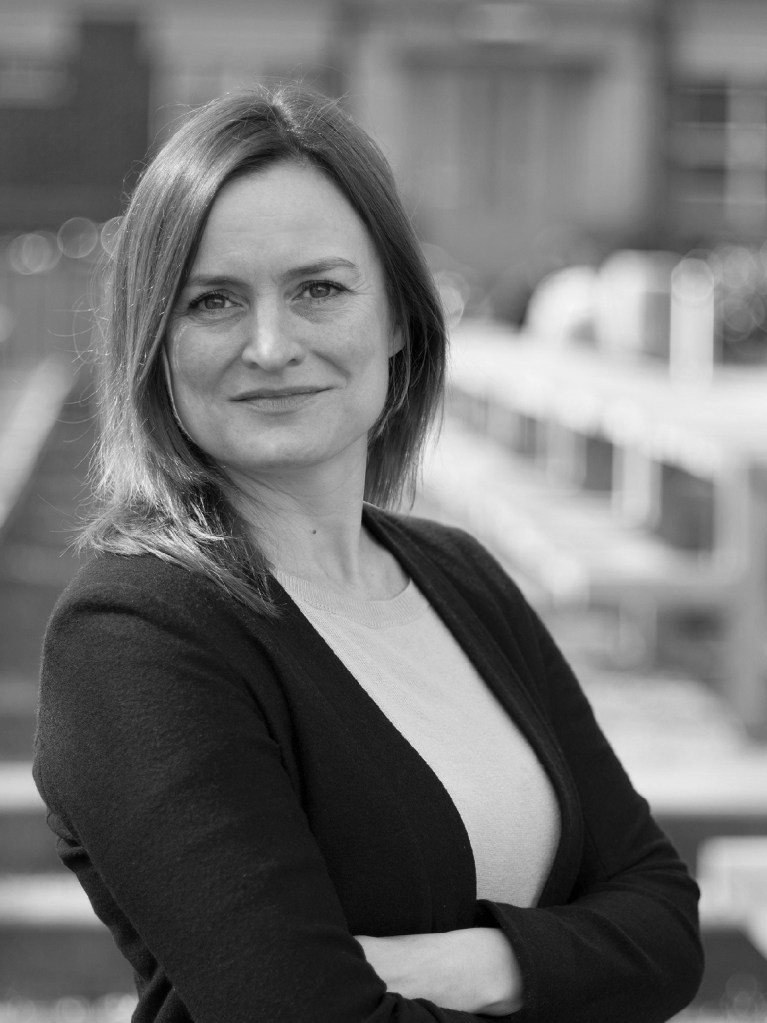
Hilde Remøy
Hilde Remøy is Professor of Real Estate Management and head of the section Real Estate Management at the department of Management in the Built Environment (MBE), faculty of Architecture and the Built Environment at Delft University of Technology (TU Delft). She was visiting professor at Federico II University of Naples (2021-2022). She is board member and past president (2018-2019) of the research network European Real Estate Society (ERES) with more than 1000 members and is editor of the Journal of Sustainable Real Estate.
After an international educational and professional path, including Norway, Italy, and the Netherlands, Hilde Remøy is now teaching, researching and publishing on sustainable adaptive reuse of real estate and heritage. She focuses on the value, lifespan and continued reuse of real estate. She conducts research ranging from large scale European funded projects to research for Dutch practice, working with researchers and professionals of various disciplines and backgrounds. In 2017, she organised and chaired the ERES annual conference with more than 400 participants at the TU Delft.
Hilde Remøy studied architecture and urbanism at the Norwegian University of Science and Technology (NTNU) and at the Politecnico di Milano (Erasmus). She graduated from NTNU in 1997. From 1998 to 2005, she worked as an architect at Dutch architecture firms on different projects, from master planning and public buildings to building adaptations and interior designs. She is registered at the Dutch Architects Registry. From 2005 to 2009, she conducted her PhD research on adaptive reuse, “Out of Office, a Study on the Cause of Office Vacancy and Transformation as a Means to Cope and Prevent”, which she successfully defended in 2010.
Hilde Remøy is coordinating and teaching in the BSc and MSc curriculum of the Faculty of Architecture and the Built Environment. She has been a supervisor for the faculty Solar Decathlon Team. She also teaches in post-academic courses, focusing on the financial aspects of adaptive re-use, and is frequently invited to give lectures and presentations at other universities, conferences and symposia. She is currently involved in the renewal of the TU Delft BSc curriculum as coordinator of the learning track “Sustainable society”.
Hilde Remøy has acquired, led and conducted several research projects, such as the European Commission funded research projects QuiVal, REPAiR, Reincarnate, and to long-term national research projects, e.g. for the municipality of Rotterdam, the province of Gelderland, the Central Government Real Estate Agency and the Ministry of the Interior and Kingdom Relations (BZK). She has published seven books, and is working on the eighth. Next to this, she has published numerous scientific articles and book chapters, and writes columns for practice magazines.
Next to teaching and doing research, Hilde Remøy has been engaged in several ancillary activities. In 2011, she was one of the initiators of SHS Delft, a student led organisation that converts empty buildings to temporary student housing, and was member of the supervisory board until 2017.


